
LoRa, BLE and Zigbee — Wireless Network Design
LoRaWAN sensor networks, BLE Mesh, Zigbee, Thread and Matter. Long range and low power: nodes, gateways, antenna matching and field testing.
Typical project:LoRaWAN 50+ node network· 6–14 weeks
Project
Tell us briefly about the project: what you want to build, which functions it needs, the rough timeframe. If we have done something similar we will send an example.
LoRa/LoRaWAN gateway and node development, BLE Mesh, Zigbee, Thread, Matter, NB-IoT, Sub-GHz custom protocols. CE-RED and FCC compliance.
The wireless choice follows the requirement, not fashion. Kilometres of range and years on a battery mean LoRa; direct connection to a phone means BLE; a dense indoor network means Zigbee or Thread. A wrong choice can only be fixed later by rebuilding.
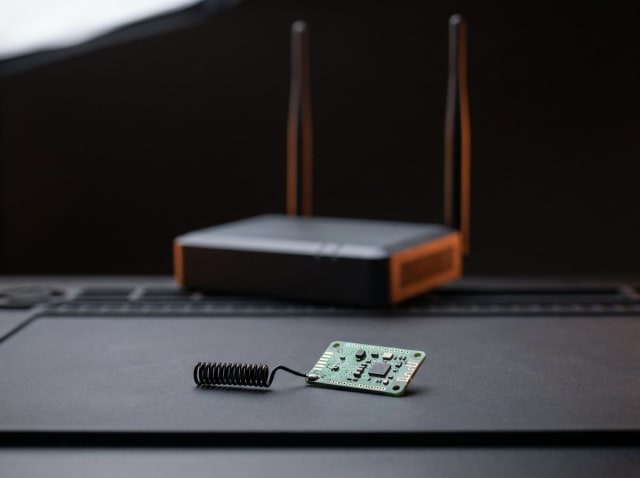
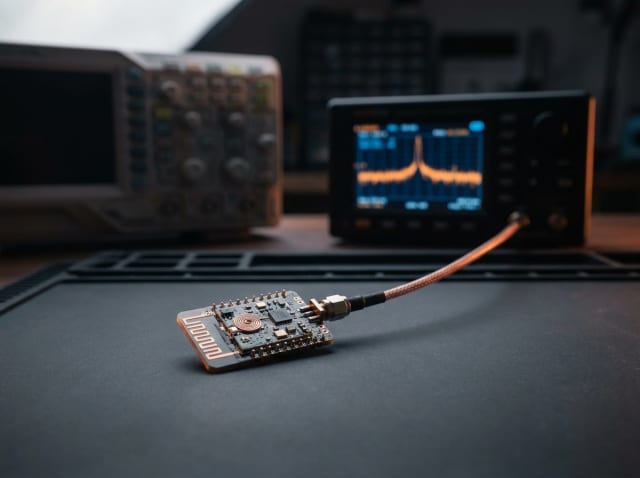
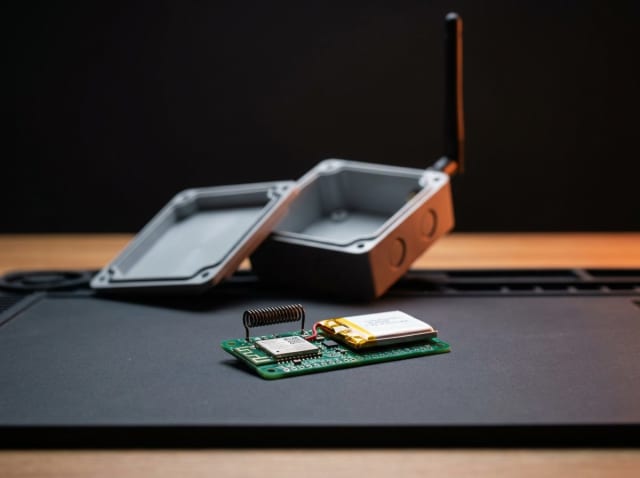
On the node side the energy budget is calculated: when it sleeps, when it wakes, how many millicoulombs one message costs. On the gateway side, coverage, channel plan and the server link are set up. Antenna matching is a stage of its own — an antenna placed badly on a board can cut the range several times over.
The job is not finished without a field test. Signal strength is measured in the real building or area, lost packets are counted, and node positions are changed if needed.
How we work
What this area covers
- LoRa / LoRaWAN gateway + node (Semtech SX127x, SX126x)
- BLE Mesh, iBeacon, Nordic nRF52
- Zigbee, Thread, Matter smart-home protocols
- NB-IoT, LTE-M cellular integration
- Sub-GHz custom protocols (868/915 MHz)
- CE-RED / FCC certification test preparation
What you receive
- Protocol comparison and reasoning for the choice
- Node firmware, with the energy budget calculation
- Gateway configuration and server connection
- Antenna selection and matching measurements
- Field test report — signal strength and packet loss
- Network map and node placement plan
- Operating instructions — adding nodes, changing batteries
Technologies we work with
From concept to production
- 01
Consultation and Requirements Analysis
We jointly define the project's goals, functional requirements, and budget/timeline constraints. NDA signed if needed.
- 02
Architecture and Schematic Design
System architecture, part selection, schematic drafted. Initial BOM and PCB block diagram agreed upon.
- 03
PCB Layout and Firmware
PCB design (KiCad/Altium), signal integrity, EMC checks. Firmware developed in parallel. Interim reviews.
- 04
Prototype and Testing
First PCB batch assembled and lab-tested. Validation with firmware. Required adjustments.
- 05
Production and Support
DFM optimization for mass production. Documentation, user manual, long-term technical support.
Frequently asked questions
Other engineering areas
Have an idea? Let's talk
Small prototype, medium-scale R&D, or long-term technical support — regardless of your project size, I respond within 48 hours.