
Embedded Firmware and Microcontroller Programming
STM32, ESP32 and Arduino firmware development — bare-metal C/C++, FreeRTOS, Zephyr. Sensor integration, low-power design, bootloader and OTA updates.
Typical project:Sensor-based IoT device· 3–8 weeks
Project
Tell us briefly about the project: what you want to build, which functions it needs, the rough timeframe. If we have done something similar we will send an example.
Microcontroller programming with STM32, ESP32, Arduino, Raspberry Pi. FreeRTOS, bare-metal C/C++, low-power design.
Firmware defines a device's character: the same board runs for years on a battery with well-written code, and flattens it in a week with poor code. So we start from the architecture — which event happens when, when the processor sleeps, where data is stored.
We work with STM32 (Cortex-M0/M4/M7), ESP32, nRF and RP2040. Where real-time behaviour matters we use FreeRTOS or Zephyr; on simple, very low-power devices, bare-metal C. Sensors connect over I2C, SPI, UART and CAN; industrial devices frequently require Modbus.
For a device in the field two things matter most: updates and security. We build in a bootloader and OTA so new firmware can reach thousands of devices remotely, and secure boot with code signing so foreign firmware cannot be loaded onto them.
How we work
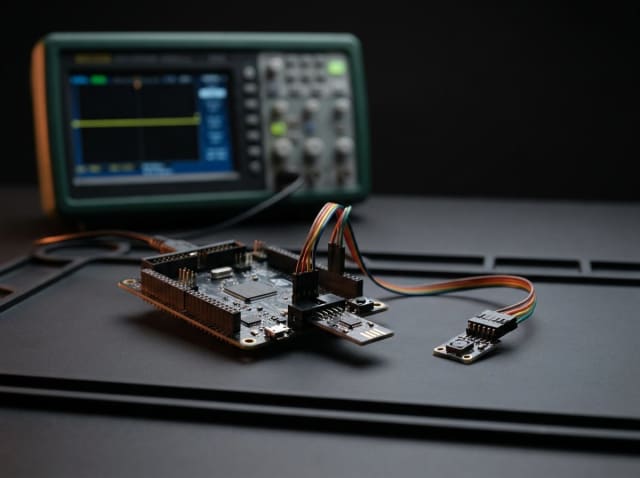
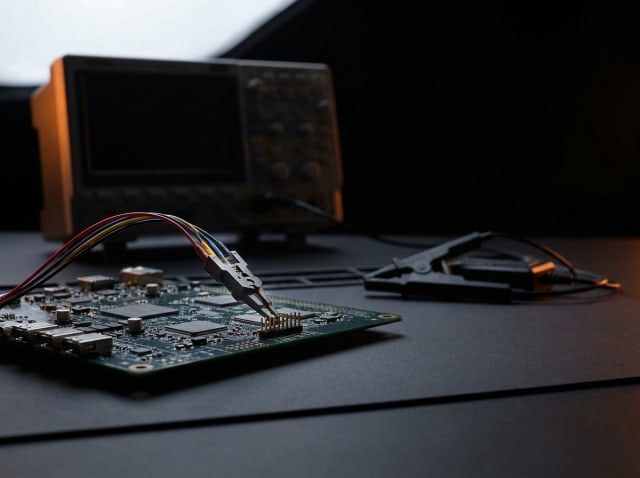
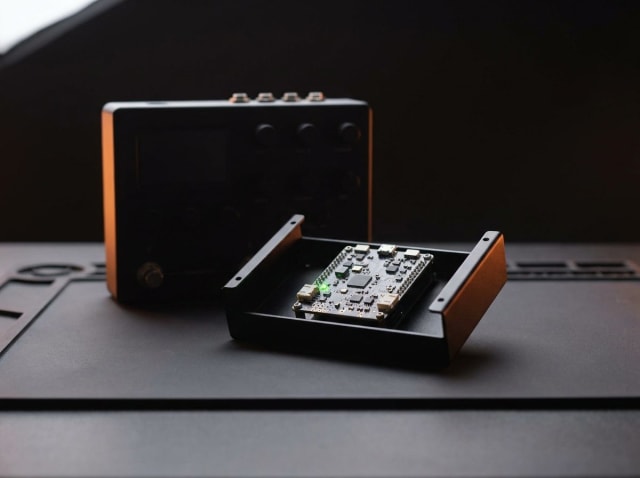
What this area covers
- Microcontroller firmware (STM32, ESP32, Arduino)
- Sensors and actuators (I2C, SPI, UART, CAN)
- Real-time systems (FreeRTOS, Zephyr)
- Low-power consumption optimization
- Bootloader and OTA firmware updates
- USB, BLE, Wi-Fi, LoRa integration
What you receive
- Firmware source code, with a Git repository
- Architecture document and module description
- Bootloader and OTA update mechanism
- Power consumption measurement report
- Test procedure and results
- Production flashing instructions
- The code is yours — you are not locked in for later changes
Technologies we work with
From concept to production
- 01
Consultation and Requirements Analysis
We jointly define the project's goals, functional requirements, and budget/timeline constraints. NDA signed if needed.
- 02
Architecture and Schematic Design
System architecture, part selection, schematic drafted. Initial BOM and PCB block diagram agreed upon.
- 03
PCB Layout and Firmware
PCB design (KiCad/Altium), signal integrity, EMC checks. Firmware developed in parallel. Interim reviews.
- 04
Prototype and Testing
First PCB batch assembled and lab-tested. Validation with firmware. Required adjustments.
- 05
Production and Support
DFM optimization for mass production. Documentation, user manual, long-term technical support.
Frequently asked questions
Other engineering areas
Have an idea? Let's talk
Small prototype, medium-scale R&D, or long-term technical support — regardless of your project size, I respond within 48 hours.