
IoT Platform and Backend Development
IoT platform development — MQTT broker, device management, database and dashboard. Node.js, Python (FastAPI), Mosquitto/EMQX, REST and WebSocket APIs.
Typical project:IoT platform + dashboard· 4–10 weeks
Project
Tell us briefly about the project: what you want to build, which functions it needs, the rough timeframe. If we have done something similar we will send an example.
Backend, API, cloud integration. Python, Node.js, MQTT brokers, REST/WebSocket, dashboards.
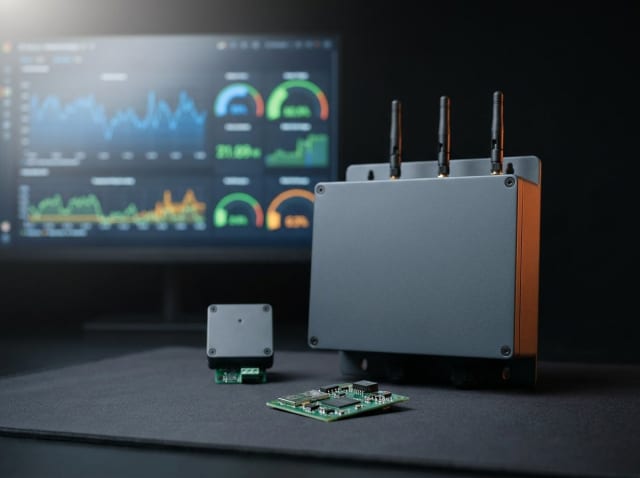
A device may work perfectly, but it is worth little if the data does not flow somewhere. An IoT platform builds that flow: the device publishes, the broker receives, the database stores, the dashboard displays, and an alert goes out when a threshold is crossed.
For transport we use MQTT (Mosquitto or EMQX); the backend is built on Node.js or Python (FastAPI); data is stored in PostgreSQL or a time-series database. Between device and dashboard there are REST and WebSocket APIs — one for queries, the other for live updates.
Scale is settled at the start: a design that works with 10 devices can fall apart at 10,000. Device provisioning, key management, message rate and data retention are defined at the beginning of the project.
How we work
What this area covers
- REST API and WebSocket servers (Node.js, Python)
- MQTT broker configuration and custom protocols
- IoT dashboards (Grafana, custom React)
- Cloud integration (AWS IoT, Azure, self-hosted)
- Edge computing and data pre-processing
- Database design (PostgreSQL, TimescaleDB, InfluxDB)
What you receive
- MQTT broker installation and configuration
- Backend service, with source code
- Database schema and migrations
- REST and WebSocket API documentation
- Dashboard — charts, device list, alerts
- Device provisioning and key management
- Server deployment and start-up documentation
Technologies we work with
From concept to production
- 01
Consultation and Requirements Analysis
We jointly define the project's goals, functional requirements, and budget/timeline constraints. NDA signed if needed.
- 02
Architecture and Schematic Design
System architecture, part selection, schematic drafted. Initial BOM and PCB block diagram agreed upon.
- 03
PCB Layout and Firmware
PCB design (KiCad/Altium), signal integrity, EMC checks. Firmware developed in parallel. Interim reviews.
- 04
Prototype and Testing
First PCB batch assembled and lab-tested. Validation with firmware. Required adjustments.
- 05
Production and Support
DFM optimization for mass production. Documentation, user manual, long-term technical support.
Frequently asked questions
Other engineering areas
Have an idea? Let's talk
Small prototype, medium-scale R&D, or long-term technical support — regardless of your project size, I respond within 48 hours.