
Server and Network Equipment Repair in Baku
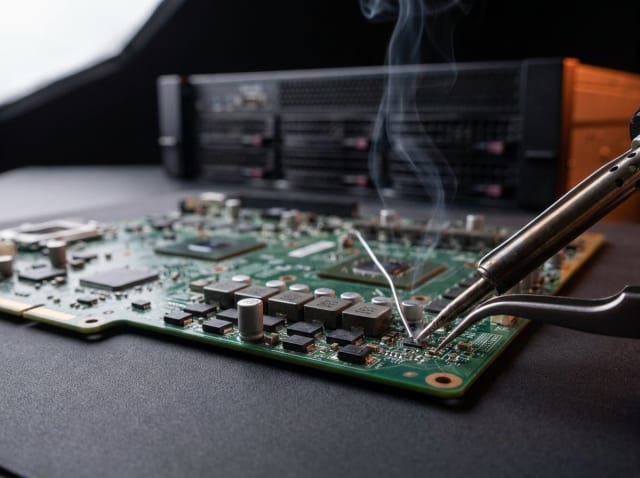
Server and network equipment repair in Baku — circuit board repair for server power supplies, mainboards, switches, routers and ASIC miners: no POST, burnt PoE port, hashboard losing chips.
Order
Send the make and model and describe the fault briefly. A video helps most — film the fault. Clear photos of the board help too.
Electronics repair for servers, network equipment and ASIC miners: server power supplies and mainboards, switches and routers, PoE ports, SFP/QSFP interfaces and hashboards. Component-level circuit board repair, express handling for data centres.
How we work
Not every device can be repaired
Sometimes restoration is not possible: the chip is discontinued and no spare can be sourced, no donor board is available, the board is severely damaged by fire or liquid, or earlier repair attempts have left it beyond recovery. In such cases we explain the situation plainly and, where possible, suggest an alternative.
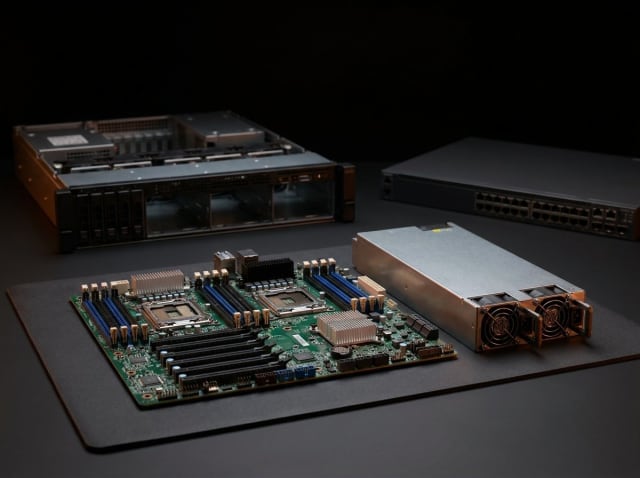
In server and network equipment downtime is a direct loss, so we handle this area in express mode. Restoring redundant power supplies, diagnosing mainboards that will not POST, cases where IPMI does not respond, and shorts on PoE ports are the requests we see most.
We also restore SFP/QSFP ports and network interfaces, and repair the hashboards and power supplies of ASIC miners (Antminer, Whatsminer) — throughout, the work is circuit board repair rather than buying new equipment. For data centres an ongoing contract service is available.
In this group the most common source of trouble is the voltage regulator (VRM) circuit and the power rail: a MOSFET punctures and then the whole board stops responding. Second place goes to cooling — dust clogs the heatsinks, and constant overheating fatigues the solder joints.
Devices we repair
Common faults we repair
- A redundant server power supply has burnt out
- The mainboard will not POST
- IPMI / BMC does not respond
- The server starts, then shuts itself down
- A short on the PoE port of network equipment
- Switch ports will not link
- The SFP / QSFP port does not see the module
- The router will not start, no indicators light
- The ASIC miner hashboard is losing chips
- The miner power supply has burnt out
- A punctured MOSFET in the VRM circuit
- The fans run at full speed, the system overheats
Typical causes of failure
- One of the redundant power supplies burning out
- A PoE port lost to a surge arriving on the network cable
- A punctured MOSFET in the VRM circuit
- Cooling degraded by dust and constant overheating
- Corrupted BMC/IPMI firmware
- Damage to an SFP port and its optical interface
- Fatigued solder joints under the chips of a miner hashboard
- A burnt input stage after a mains voltage surge
Brands and platforms we work with
How the repair works
- 01
Enquiry and first contact
Tell us about the fault on WhatsApp or Telegram. We review what you send and let you know whether the device fits the work we take on.
- 02
Acceptance and diagnostics
If we can take the device on, we confirm it in advance — do not ship it before you have our confirmation. Once it reaches the lab, diagnostics are completed within 48 hours (two working days).
- 03
Estimate and approval
You receive a report covering the cause of the fault, the estimated cost, spare-part availability and the timeline. Work begins only after you approve it.
- 04
Testing and handover
After the repair the device runs a minimum 24-hour load test. Once it proves stable in normal operation, we report the result and hand it over.
Diagnostics and pricing
Diagnostics is paid work — 10–50 AZN depending on the complexity of the board. If you have us carry out the repair, that amount is deducted from the final price. An exact repair price is given only after diagnostics and is agreed with you before any work starts.
More about the diagnostic feeFrequently asked questions
Other repair areas
Request a repair
Message us on WhatsApp or Telegram with the BRAND and MODEL of the device and describe the fault in as much detail as you can. A VIDEO helps most: record the fault and explain in your own words what happens. Also send clear photos of the device and, if accessible, of the circuit board from several angles. The more detail you provide, the faster and more accurate our answer.