
Solar Inverter Repair in Baku
Solar inverter repair in Baku — circuit board repair for solar inverters, MPPT charge controllers and battery BMS boards: system will not start, will not charge, throws errors, burnt IGBT module.
Order
Send the make and model and describe the fault briefly. A video helps most — film the fault. Clear photos of the board help too.
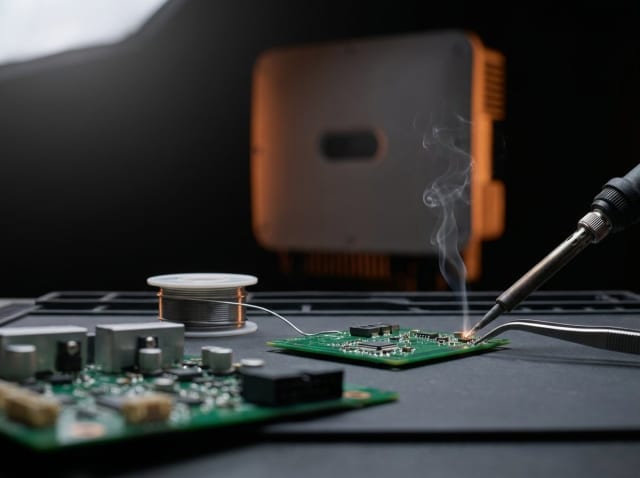
Electronics repair for solar inverters, MPPT charge controllers, Li-ion and LiFePO4 battery BMS boards and wind turbine control boards. Component-level circuit board repair for on-grid and off-grid systems.
How we work
Not every device can be repaired
Sometimes restoration is not possible: the chip is discontinued and no spare can be sourced, no donor board is available, the board is severely damaged by fire or liquid, or earlier repair attempts have left it beyond recovery. In such cases we explain the situation plainly and, where possible, suggest an alternative.
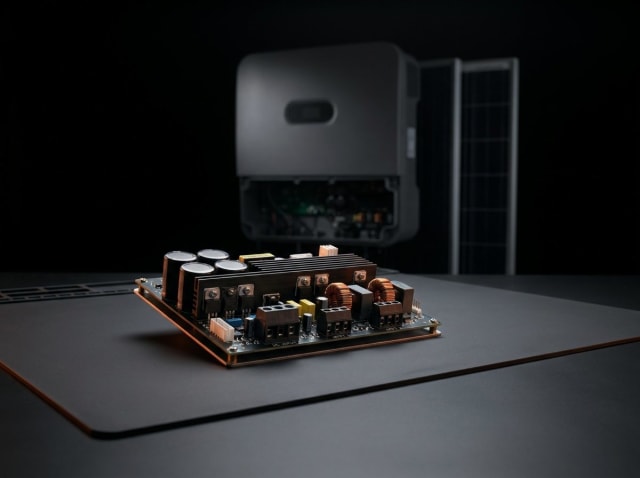
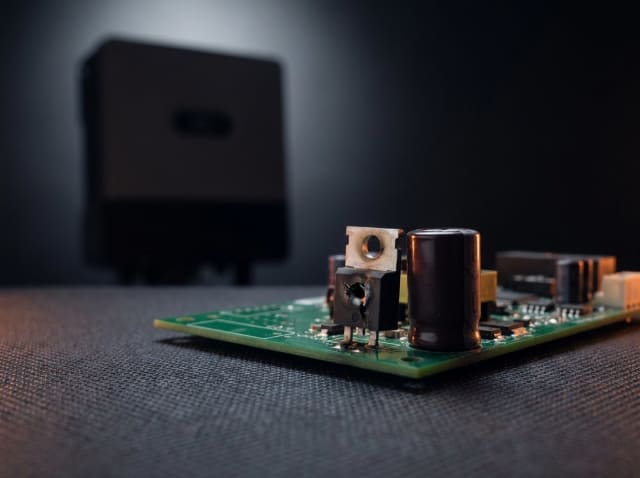
In a solar system the part that fails most is not the panels but the inverter and the MPPT charge controller — they carry the load and the heat. On on-grid and off-grid inverters we restore the control board and the IGBT and MOSFET modules; the work is circuit board repair, not buying a new inverter.
On Li-ion and LiFePO4 battery packs we repair the BMS and replace cells: when a pack will not charge or its capacity has dropped sharply, the cause is usually a few weak cells or the balancing circuit. Wind turbine pitch and control boards also fall under this area.
The first step of diagnostics in this group is telling whether the fault is in the inverter, the panels or the battery. The voltage from the panels, the DC link and the battery side are measured separately — which prevents healthy equipment being replaced for nothing.
Devices we repair
Common faults we repair
- The inverter will not start, the display stays dark
- The inverter throws an error code and stops
- The output voltage of the MPPT charge controller drops
- The system takes no energy from the panels
- An IGBT or MOSFET module has burnt out
- The battery pack will not charge
- Battery capacity has fallen sharply
- The BMS will not balance, the cells differ
- Grid export (on-grid) does not work
- The load drops out at night
- The fan has stopped and the inverter overheats
- The wind turbine pitch control does not respond
Typical causes of failure
- High voltage from the panels puncturing the input stage
- IGBT and MOSFET modules burnt by load
- DC link capacitors drying out
- A protection stage lost to lightning or mains surges
- Weak cells in the battery pack and a balancing fault
- Overheating from dust after the cooling fan stopped
- Corrosion inside the enclosure from moisture and condensation
- Miswiring or reversed polarity on the DC side
Brands and platforms we work with
How the repair works
- 01
Enquiry and first contact
Tell us about the fault on WhatsApp or Telegram. We review what you send and let you know whether the device fits the work we take on.
- 02
Acceptance and diagnostics
If we can take the device on, we confirm it in advance — do not ship it before you have our confirmation. Once it reaches the lab, diagnostics are completed within 48 hours (two working days).
- 03
Estimate and approval
You receive a report covering the cause of the fault, the estimated cost, spare-part availability and the timeline. Work begins only after you approve it.
- 04
Testing and handover
After the repair the device runs a minimum 24-hour load test. Once it proves stable in normal operation, we report the result and hand it over.
Diagnostics and pricing
Diagnostics is paid work — 10–50 AZN depending on the complexity of the board. If you have us carry out the repair, that amount is deducted from the final price. An exact repair price is given only after diagnostics and is agreed with you before any work starts.
More about the diagnostic feeFrequently asked questions
Other repair areas
Request a repair
Message us on WhatsApp or Telegram with the BRAND and MODEL of the device and describe the fault in as much detail as you can. A VIDEO helps most: record the fault and explain in your own words what happens. Also send clear photos of the device and, if accessible, of the circuit board from several angles. The more detail you provide, the faster and more accurate our answer.