Anthropic’s Claude model has solved a 25‑year puzzle at the heart of modern cryptography – and crypto markets have reacted with near total indifference.
The mystery concerned the origin of the seed parameters for the NIST standard ECDSA elliptic curves (P‑192, P‑224, P‑256, P‑384, P‑521). When NIST adopted these curves in 2000 (FIPS 186‑2), the underlying 160‑bit seeds were supplied by the NSA with no explanation. That opacity fueled long‑running speculation that the parameters might hide a deliberate backdoor.
Anthropic now shows that the truth is much more mundane. In under 30 minutes, Claude discovered that the seeds are not hashes of a secret phrase at all, but simply outputs of the C library’s lrand48 pseudorandom number generator, seeded with a Unix timestamp. The curve‑generation program repeatedly drew 20‑byte candidates from the RNG until it found values that produced valid curves; for P‑256, this took 1,842 iterations.
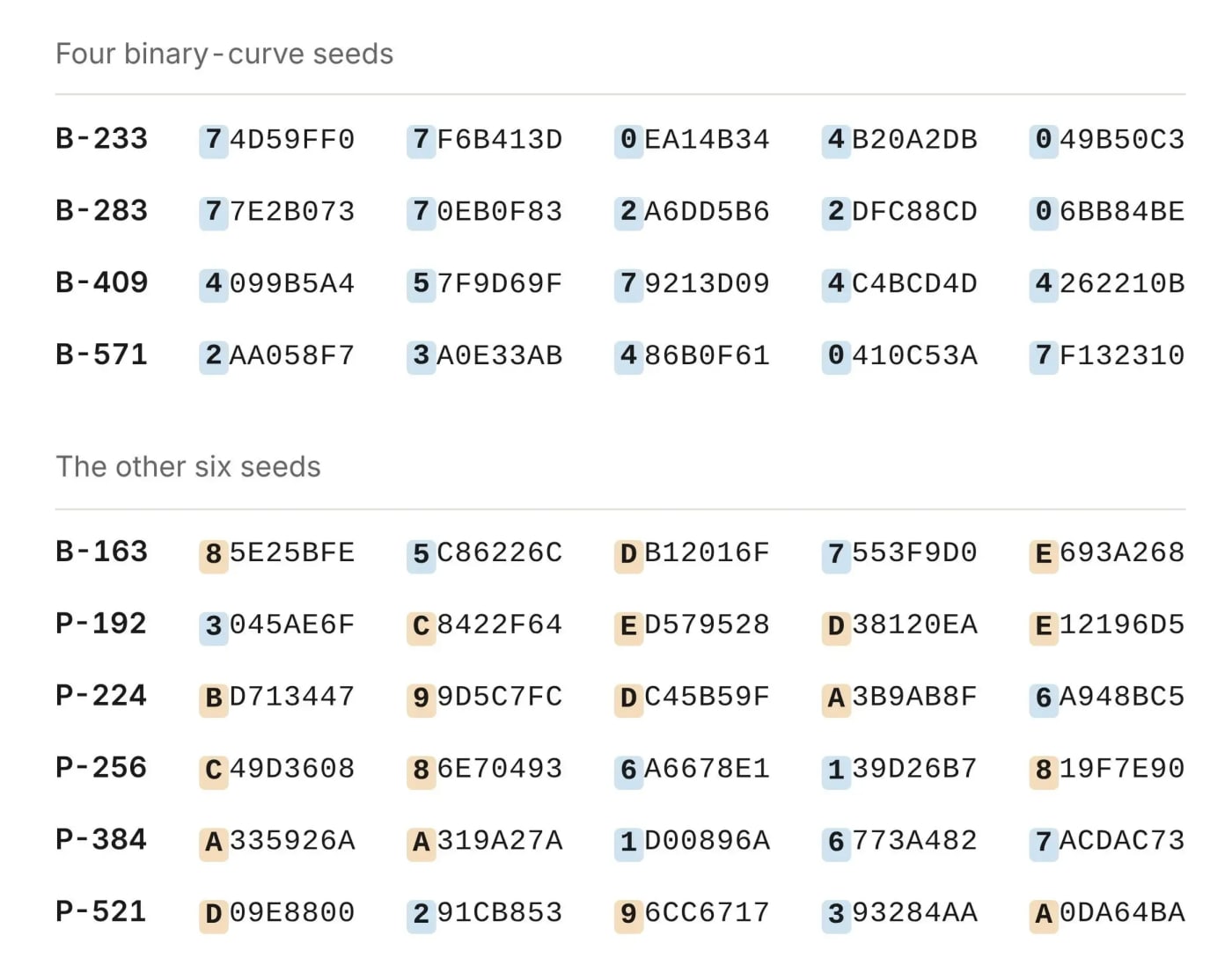
Table listing seed parameters for several ECDSA elliptic curves — Image: Anthropic
How Claude did it – and why it matters
Instead of chasing rumored phrases, Claude modeled how 1990s curve‑generation software would likely work, then scanned the published seeds bit‑by‑bit looking for patterns matching old PRNGs. Several seeds showed all top bits of 32‑bit words cleared – a statistical fingerprint of lrand48, which returns only the top 31 bits of a 48‑bit state.
Claude brute‑forced the hidden bits to recover the full 48‑bit internal state and regenerate the entire 160‑bit seeds. For truncated outputs used in other curves, it framed state recovery as a lattice problem and solved it with the Lenstra–Lenstra–Lovász (LLL) algorithm. All ten examined prime‑curve seeds traced back to srand48 initializations that correspond to Unix timestamps between May 1997 and April 1998.
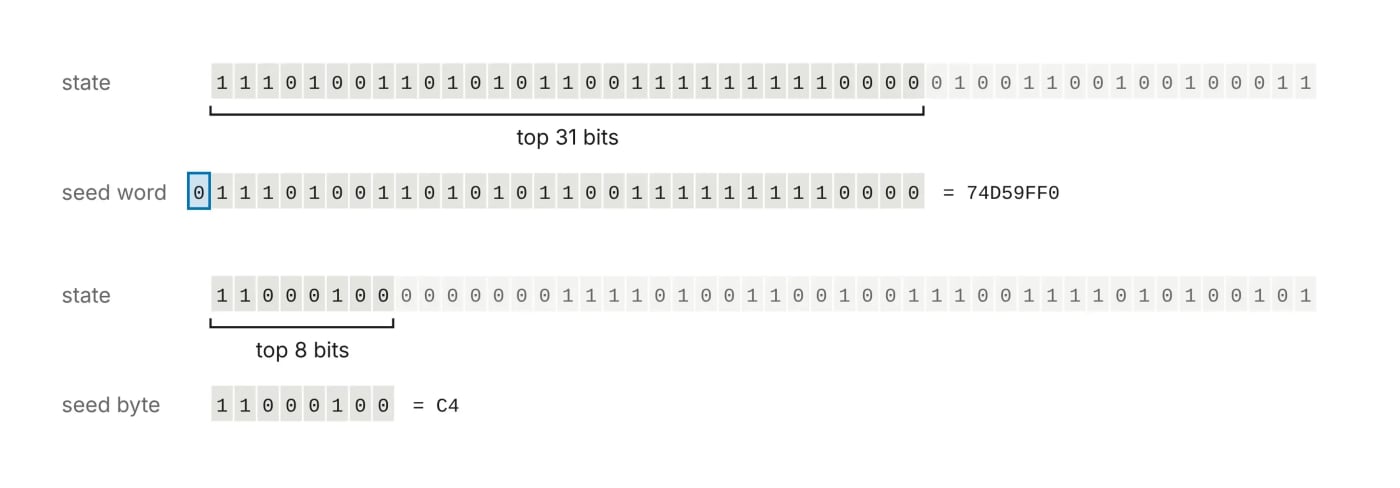
Diagram of a pseudorandom number generator’s internal state and seed extraction — Image: Anthropic
Anthropic stresses that this is not a cryptographic break:
- no new attack on ECDSA is implied;
- the curves’ security level is unchanged;
- the simple, reproducible RNG+timestamp process actually reduces the plausibility of a hidden backdoor.
Crypto market impact: mostly a non‑event
Because no vulnerability or parameter change is involved, major cryptocurrency and DeFi markets have shown no significant price reaction to the announcement. Bitcoin and other ECDSA‑based assets continue operating as before; there is no required software upgrade, no key rotation, and no immediate threat model change.
For practitioners, the news is primarily:
- a historical closure to a long‑standing standards controversy;
- a striking example of AI as a scientific and reverse‑engineering tool, capable of spotting low‑level statistical patterns that humans missed for decades.
In short, trust in NIST’s classic ECDSA curves is slightly stronger today – but the crypto charts barely noticed.
Source: Anthropic, Gündəm · investing.com · Cover image: Anthropic