After the success of its ESP32 DW3000 board in the maker community, Makerfabs is bringing ultra‑wideband to the Nordic nRF52840 ecosystem. The new nRF52840 UWB DW3000 (model 528UWBD3) development board integrates Bluetooth 5 and ultra‑wideband (UWB) ranging, targeting indoor positioning and tracking projects.
At its core, the board uses a Nordic nRF52840 MCU with 1 MB Flash and 256 KB RAM, plus a Bluetooth 5.0 / 2.4 GHz radio supporting 2 Mbps, 1 Mbps, 500 kbps and 125 kbps PHYs. UWB functionality is provided by a DW3210 chip, offering more than 30 m range at 850 kbps and a claimed ~10 cm positioning error. Supported UWB modes include TWR, TDOA and PDOA, with operation on channel 5 and channel 9.
The hardware is rounded out by an on‑board 1.3" OLED display, USB Type‑C power input (4.0–5.25 V), both native USB and CH340K USB‑to‑UART, and 2.54 mm headers for expansion. The specified operating temperature range of −40 to +85 °C makes it suitable for lab use and harsher environments.
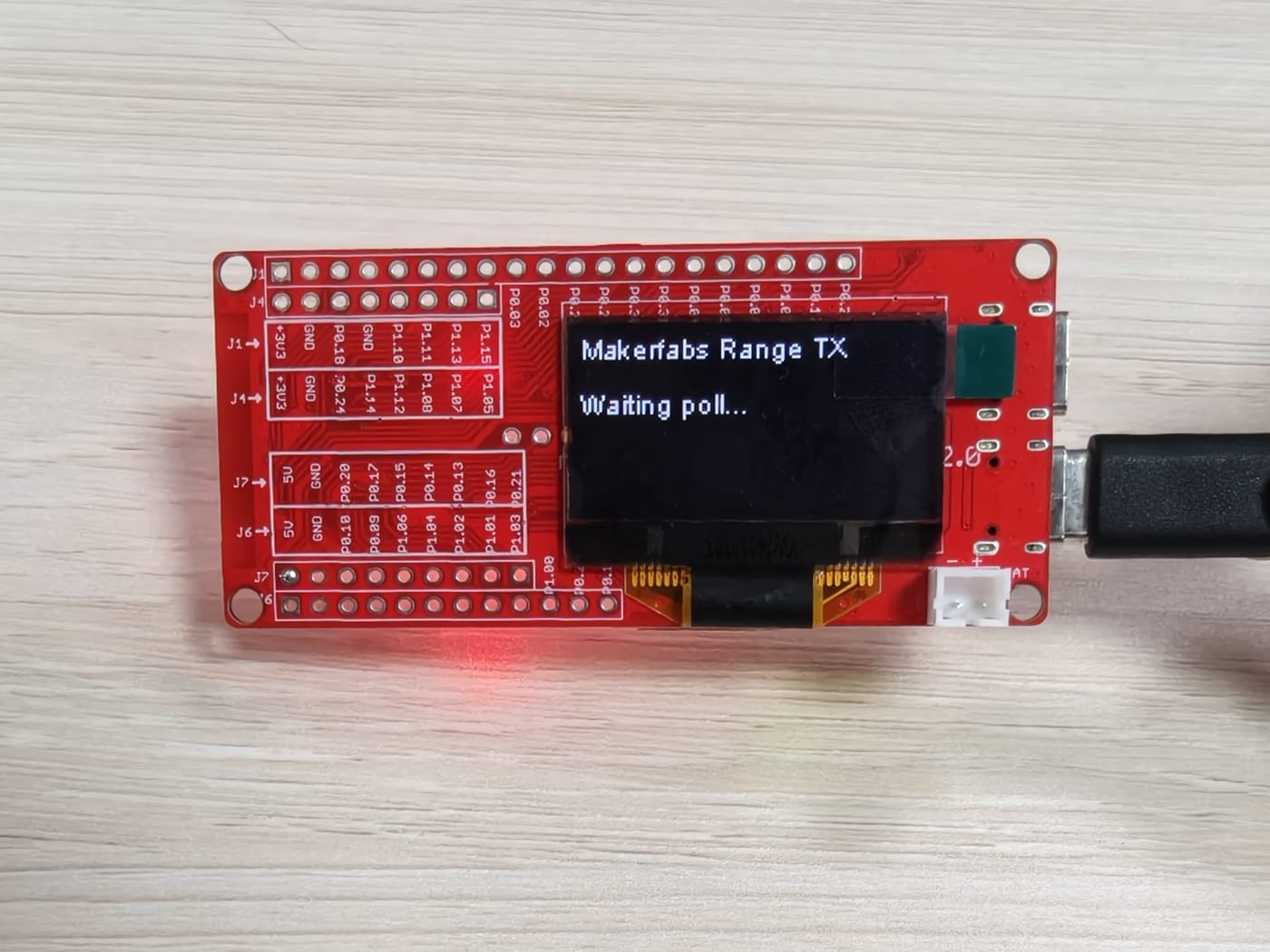
Makerfabs nRF52840 UWB development board with its OLED display powered on — Image: Makerfabs
Arduino-ready UWB networks
Makerfabs provides Arduino support via a DW3000 library on GitHub. Once installed in the Arduino libraries folder, example sketches appear under File → Examples → DW3000. These include simple one Anchor + one Tag ranging demos as well as a multi‑Anchor + multi‑Tag setup.
In the multi‑node example, a designated Master Anchor (set via MASTER_ANCHOR_ID) coordinates TDMA timing, tag scheduling and the common time base for the UWB network. This allows configurations such as 8 anchors + 8 tags for room‑scale tracking systems.
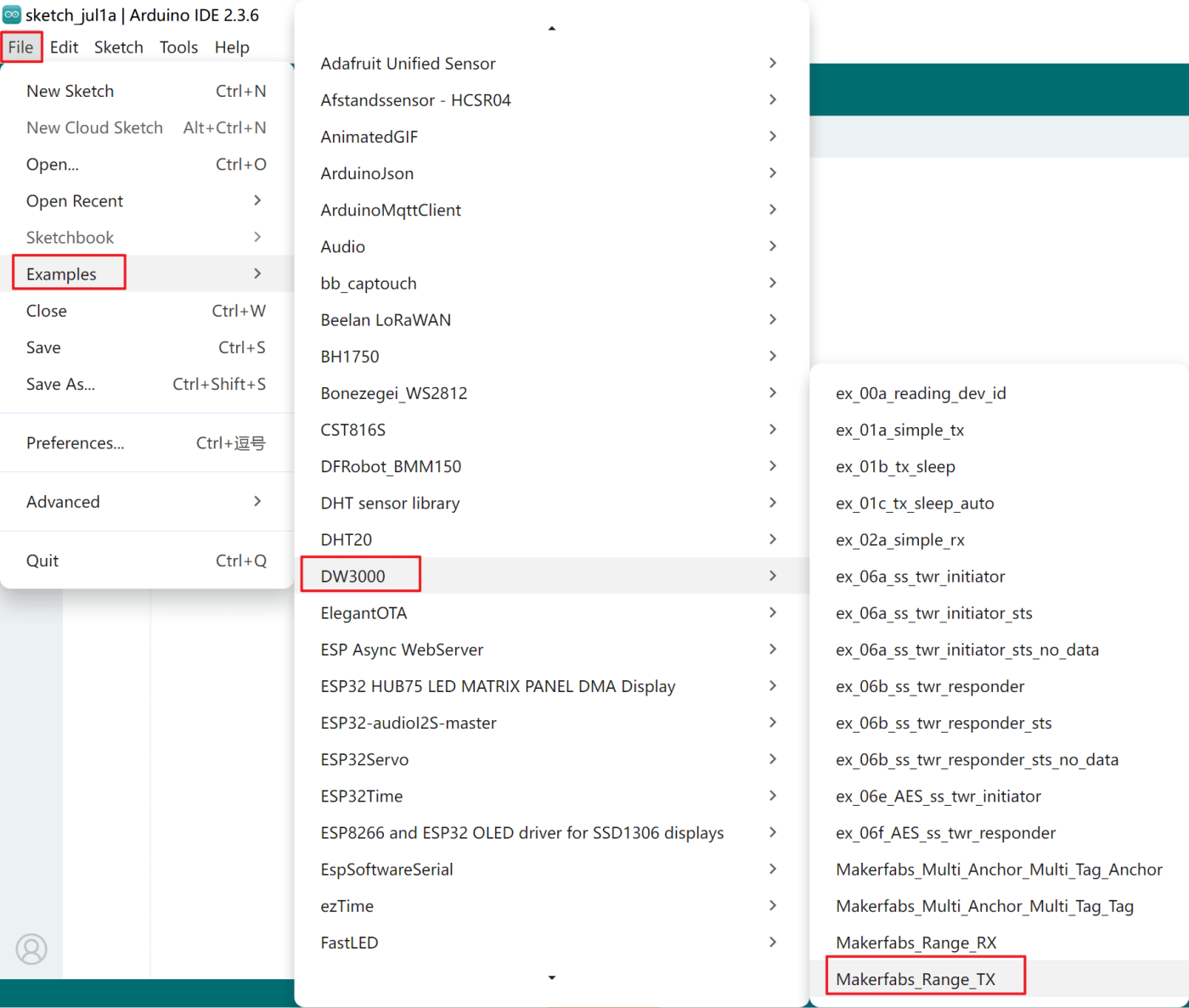
Arduino IDE menu showing example sketches for the Makerfabs DW3000 UWB board — Image: Makerfabs
For visualization, Makerfabs ships a Python‑based UWB positioning tool (uwb_visualizer.exe): you define coordinates for four anchors, select the serial port of one anchor and monitor tag positions in real time. With a price point around $43.80, the board targets makers and engineers exploring UWB‑based ranging and indoor localization without designing their own RF hardware.
Source: Makerfabs, Electronics-Lab · Cover image: Makerfabs