The Raspberry Pi CM5 is still hard to source and relatively expensive, so the new Walnut Pi CM2 steps in as a lower-cost module in the same form factor. It’s built around an Allwinner T527 octa‑core Arm Cortex‑A55 SoC with an integrated 2 TOPS NPU, optional WiFi 6/Bluetooth 5.0 module, and a Gigabit Ethernet PHY directly on the module. I/O is exposed through a pair of 100‑pin high‑density connectors, targeting partial compatibility with CM5 carrier boards.
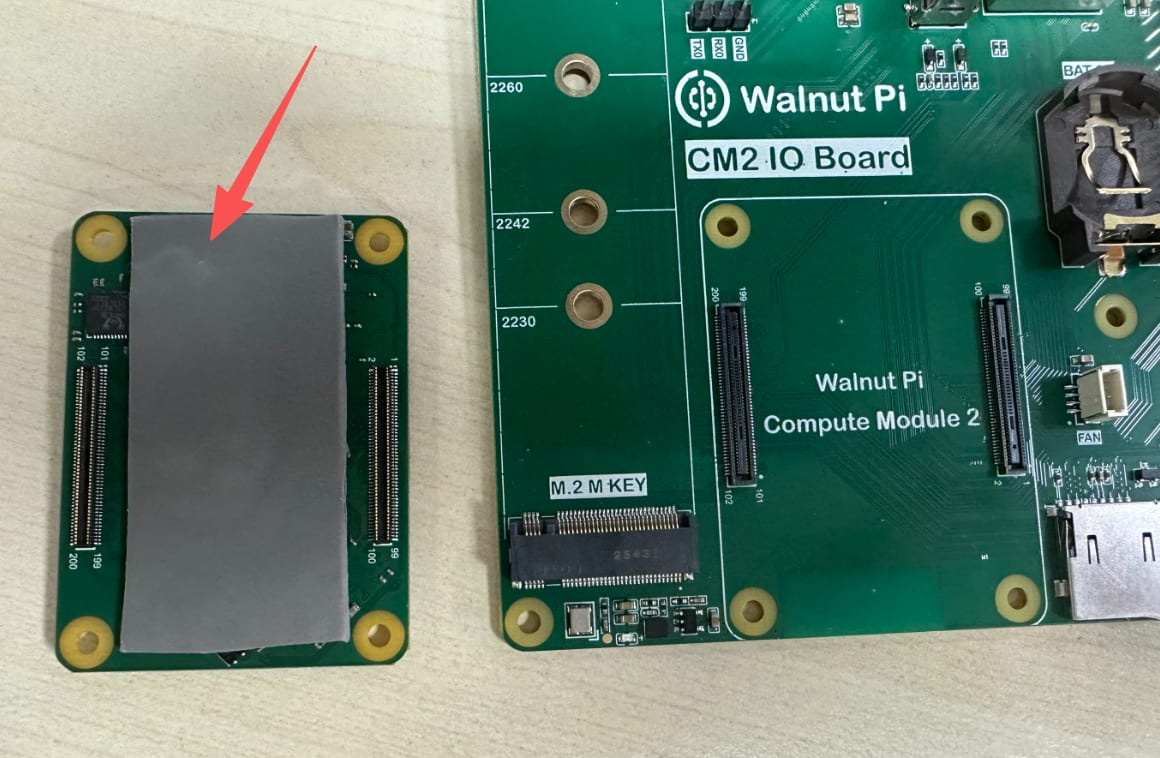
Walnut Pi CM2 compute module with thermal pad next to the CM2 IO baseboard. — Image: Walnut Pi
Specs and I/O
Functionally, Walnut Pi CM2 is the compute‑module version of the company’s credit‑card‑sized Walnut Pi 2B SBC. Depending on SKU, you get:
- Allwinner T527 SoC – 4× Cortex‑A55 @ 1.8 GHz, 4× Cortex‑A55 @ 1.42 GHz
- Auxiliary E906 RISC‑V core
- Up to 4 GB LPDDR4 RAM
- 16 GB eMMC flash
- Optional WiFi 6 + Bluetooth 5.0 module
The dedicated CM2 IO baseboard adds:
- M.2 NVMe SSD slot supporting 2230/2242/2260/2280 sizes
- RTC lithium coin‑cell holder for 3 V CR2032 with configurable charging (for rechargeable cells)
- Mounting for thermal pad, passive heatsink, or active fan
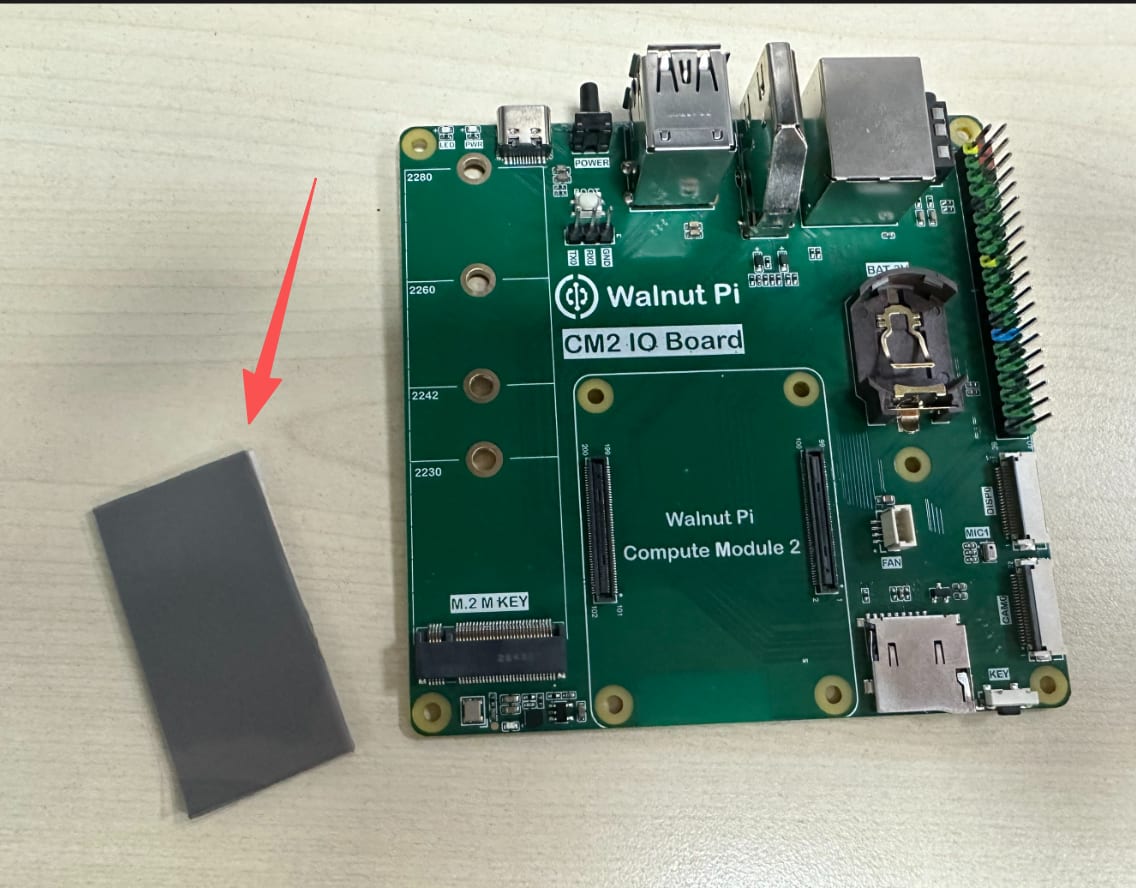
Walnut Pi CM2 IO baseboard shown next to the supplied thermal pad. — Image: Walnut Pi
Cooling and practical use
According to Walnut Pi’s documentation, the compact CM2 module can exceed 70°C when driving an HDMI display, so extra cooling is strongly recommended. Their measurements show roughly:
- Baseboard thermal pad only: about 10–15°C drop
- Heatsink only: 10–15°C drop
- Thermal pad + heatsink: around 20°C drop
- Active cooler: 20°C+ drop, with fan speed ramping up as temperature rises
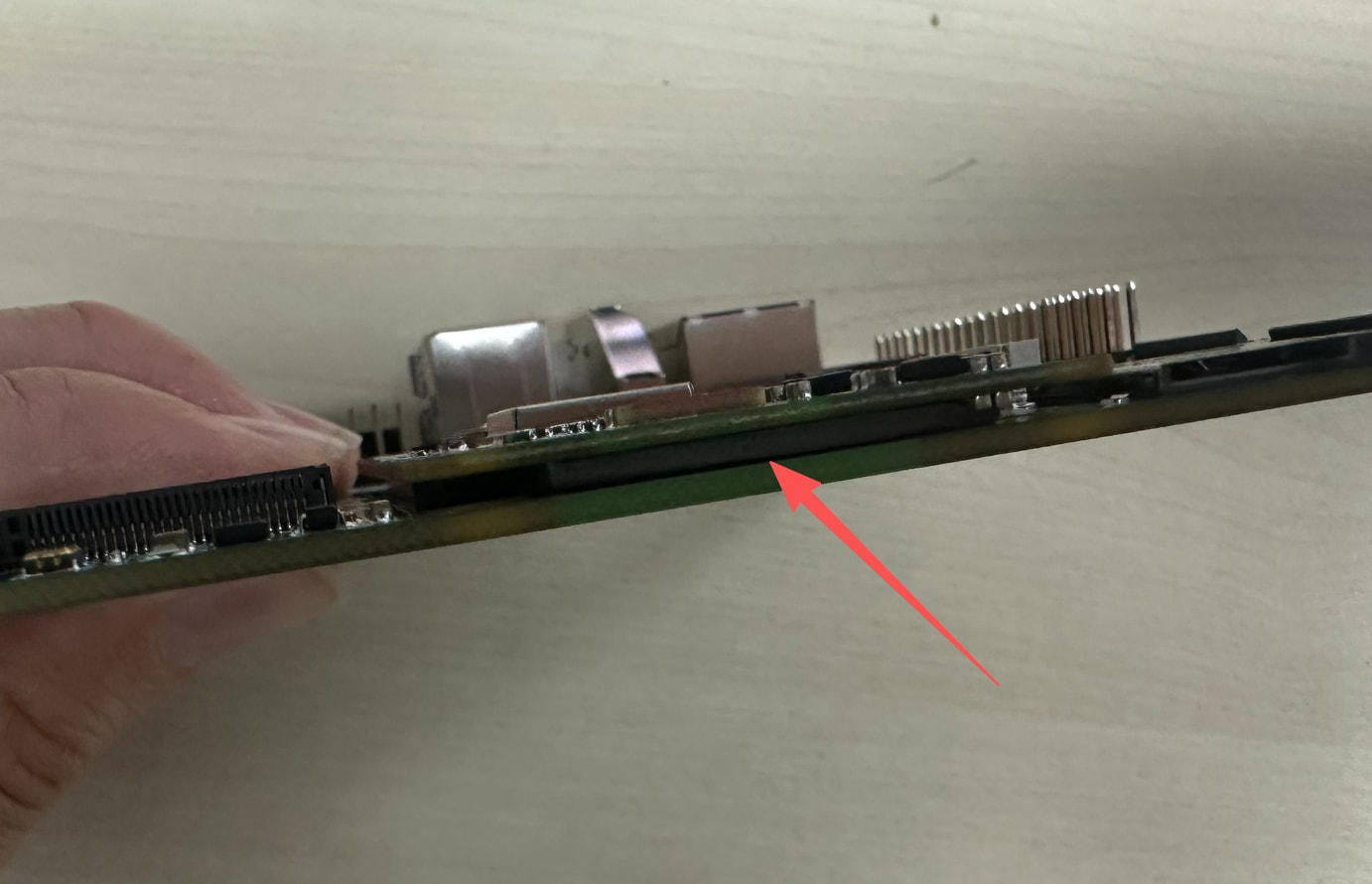
Side view of Walnut Pi CM2 mounted on a carrier board, highlighting the connector interface. — Image: Walnut Pi
The Allwinner T527 won’t match the Broadcom BCM2712 (4× Cortex‑A76) used in the Raspberry Pi CM5 for raw CPU performance, but the on‑chip 2 TOPS NPU, integrated Gigabit PHY, and optional WiFi 6 make Walnut Pi CM2 an appealing, budget‑friendly compute module for edge devices, IoT gateways, and lightweight AI workloads.
Source: Walnut Pi, CNX Software