Arduino has announced VENTUNO Q, a new single-board computer designed specifically for edge AI, robotics and physical actuation, timed ahead of the Embedded World trade show. The board marks Arduino’s 21st anniversary and extends the familiar ecosystem into higher‑end AI and robotics use cases.
Dual-brain architecture for AI + control
VENTUNO Q is built around a split architecture:
- Qualcomm Dragonwing IQ8 Series processor with NPU, delivering up to 40 dense TOPS for AI workloads
- A dedicated STM32H5 microcontroller for low‑latency actuation and motor control
- 16 GB RAM plus 64 GB expandable storage
The main SoC runs Ubuntu or Debian Linux, while the MCU side runs Arduino Core on Zephyr OS, giving developers both high‑performance AI compute and deterministic real‑time control on a single board.
Software stack and AI models
VENTUNO Q integrates with the Arduino App Lab environment, providing a unified workflow for:
- Arduino sketches
- Python scripts
- Visual AI flows
Arduino is bundling ready‑to‑use models via Qualcomm AI Hub and Edge Impulse, including local LLMs, VLMs, ASR, TTS, gesture/pose estimation and object tracking, all running fully offline. With Edge Impulse Studio now tied into App Lab, creating custom edge AI models is also supported, with more frameworks promised.
Connectivity, I/O and ecosystem
On the hardware side, VENTUNO Q offers:
- Wi‑Fi 6 and Bluetooth 5.3
- Industrial I/O including CAN‑FD, PWM and high‑speed GPIO
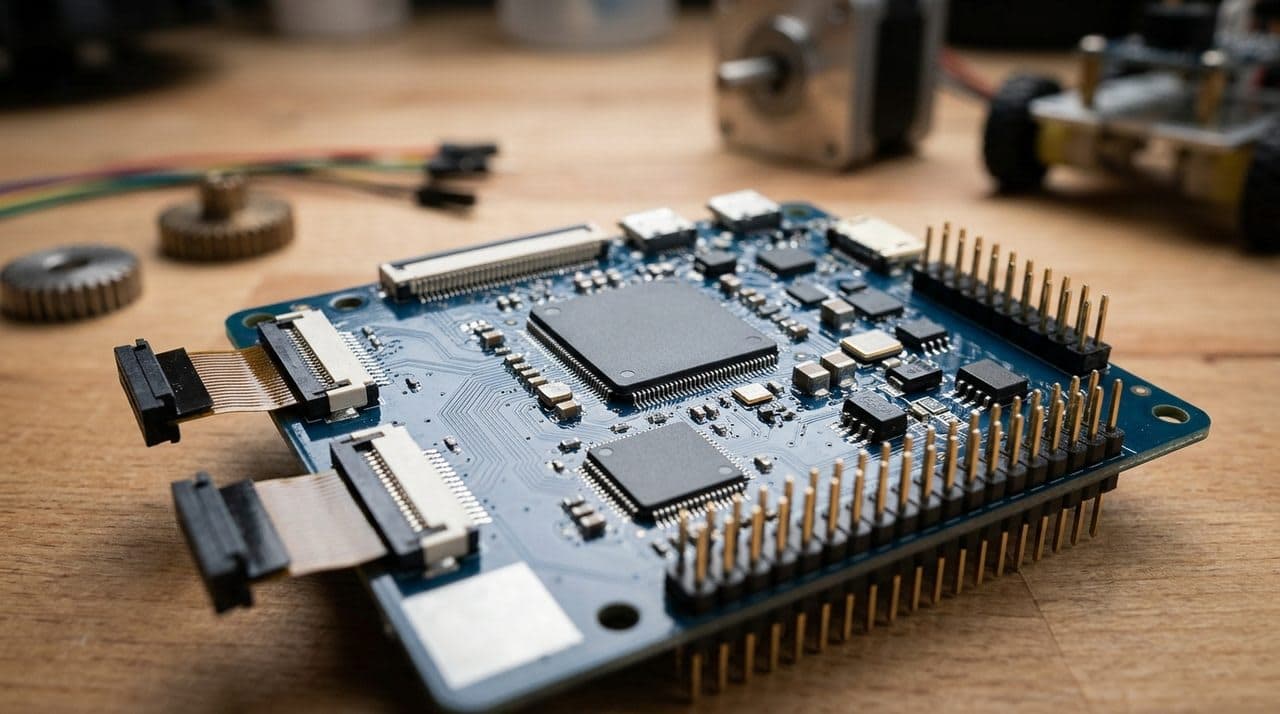
- High‑speed connectors for multiple MIPI‑CSI cameras, advanced audio and displays
- 2.5 Gb Ethernet
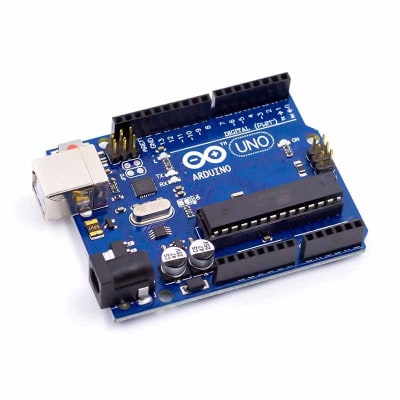
The board is compatible with Arduino UNO shields, Modulino nodes, Qwiic sensors and even Raspberry Pi Hats, positioning it as a bridge between maker and industrial ecosystems.
VENTUNO Q can be used as a standalone SBC with display, keyboard and mouse, or tethered to a PC. Arduino targets applications ranging from offline voice interfaces and autonomous robots to edge vision systems and education. The board will be available soon via the Arduino Store and major distributors such as DigiKey, Farnell, Mouser and RS.
Source: Arduino, Design News